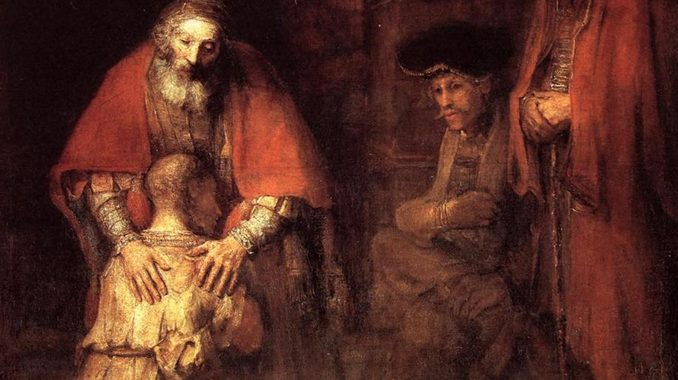
Rembrandt van Rijn, Return of the Prodigal Son, c. 1668, Hermitage Museum, Saint Petersburg, Russia.
Jesus Christ and the Church’s influence on Jack Kerouac and Timothy Leary’s last day’s visit to a Catholic Church
In his own lifetime, critics and the media berated Kerouac as a degenerate, even when he claimed in all sincerity, “all I write about is Jesus”. (from above article)
“Kerouac died shortly after a sudden violent hemorrhage of his liver. His funeral Mass was held in Lowell at St. Jean Baptiste Cathedral. Father Armand “Spike” Morisette, who celebrated the Mass, beautifully linked the mystery of Kerouac’s life to Emmaus, saying of him the words from St. Luke’s Gospel, “Wasn’t it like a fire burning in us when he talked to us on the road”? See Luke 24:13-35, specifically Luke 24 vs 32
https://www.nationalreview.com/2018/10/jack-kerouac-conservative-catholic
Like with Kerouac, best not wait till the end of life to embrace and seek God, Jesus Christ. The Divine Mercy appeals to every soul during life and at end of earthly life…
Timothy Leary eager to go to a Catholic Church/Mass in the last days of his life.
Paul’s First Letter to Timothy
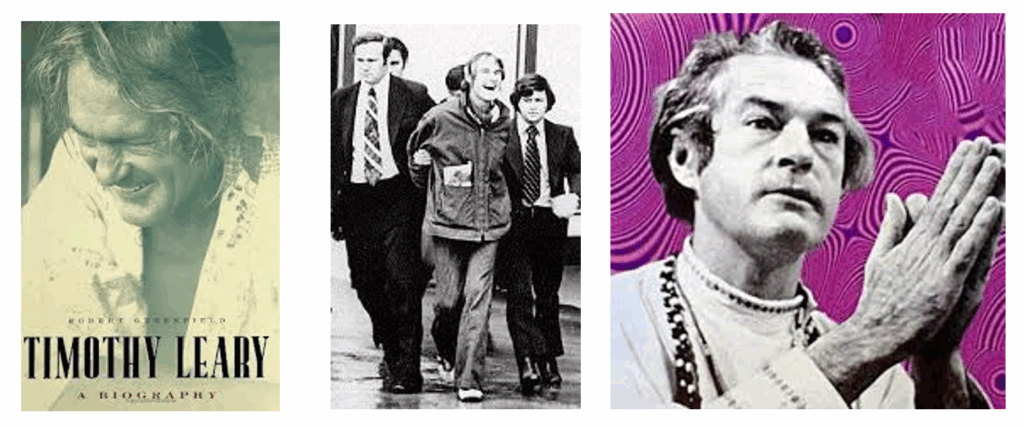
In Robert Greenfield’s 2006, 600 page biography of Timothy Leary, Greenfield (he) illustrates in the final pages of that book a poignant moment and a good reminder for fallen away Catholics and ones who have abandoned their faith. Catholics and every human can always return to God, Jesus Christ, and additionally for Catholics, the sacraments and the Church.
Greenfield writes, Leary felt he had gone “so far wrong in his life that there was no absolution or forgiveness”.
A month or two before Leary’s death, Leary asked a friend to take him to Church/Mass. He eagerly waited for his friend to arrive. Leary talked about nothing else all day, according to Greenfield, waiting for his friend to arrive. Timothy was dressed in a suit and he made it to the Church. His friend even broke protocol and instead of receiving the Eucharist on the tongue, he took it in his hand, went back to the pew where Timothy was sitting and gave him half the Eucharist.
Strict, rule-bound Catholics might contend, not without justification, that Leary should not have received Communion without first making a sincere confession and performing penance. However, Christ sees into the human heart. The simple fact that Leary wanted to be at Mass and openly expressed that he felt unworthy of forgiveness already demonstrated a real desire for repentance and reconciliation. His friend did a good thing by getting him there, though it might have been better to arrange a private conversation with a priest instead of breaking and sharing the Eucharist with Timothy.
DIVINE MERCY
The Church teaches that the saving effects of Baptism can be received not only through the sacrament of water, but also through Baptism of blood (martyrdom) and Baptism of desire. Perhaps through the intercessory prayers of long-deceased ancestors, or the hidden sacrifices of some unknown cloistered Carmelite, Benedictine, or Carthusian monk or nun praying for the conversion of sinners—or simply by the stirring of his own conscience—Timothy was being drawn back to the truth, safety, and comfort of Jesus Christ.
Though for the remaining few weeks of Leary’s life he would return to his LA home continuing with the self medication and drug taking, fortunately his old Irish Catholic upbringing became relevant and useful again and he made the movement to God. Priests have told me and I have read, Satan, the accuser, can attack a soul greatly as one approaches death.
It is truly a gift and blessing for the practicing Catholic to have the resources, tradition and sacraments available in the Church. There was much brokenness and chaos, anarchy and confusion in those tumultuous 1960s, but are not all generations rebellious in some ways? Some more than others perhaps. There was confusion for the parents, the young and even the very young.
Dylan wrote and sang in Pressing On
“Temptation’s not an easy thing, Adam given the devil reign.
Because he sinned I got no choice, it runs in my vein”. Bob Dylan, Pressing On c 1980 Special Rider music
Yet, Christ gives us the weapons and the antidotes, and they are the sacraments, His grace, His Holy Spirit and mercy.
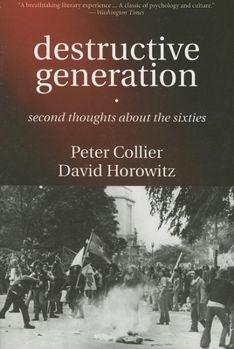
I recall as a 10 or 11 year old child in the late 1960s and early 70s, watching on the black and white TV, the body count charts. Chet Brinkley, Walter Cronkite and others reported the Westmoreland/Pentagon body counts on the “news”.
Maybe the enemy dead, both Viet Cong and North Vietnamese regular army were inflated, but in most cases the US casualties were not. Watching reels of war film footage, knowing 100-200 American dead were being returned to their home country every week from that pointless war, was maybe not as startling for me being 11 or 12, but must have been more alarming for the 17, 18 and 19 year old youth. I recall my father and mother wanting an end to the death of the American young. My parents had five sons. Some weeks there were 300 or 400 Americans killed…in a week!!!!!!!!!!
No wonder so many thought taking drugs and trying to see and fight for an alternate reality, could be a path or remedy to help move away from the insane carnage going on around them.
Much of the 60s went sideways. Dylan’s has that line in When You Gonna Wake Up, “counterfeit philosophies have polluted all of your thoughts”….
Tim Leary himself was affected by counterfeit philosophies and syncretic blends of teachings and it was spread around by him and to him. For as much of the misdirection and twisted nature, sin, folly and error of those times, the desire of young Americans to end that war and slaughter is of significant redeeming value. Sad how in 2023 and 2024, some of the same people who were protesting the Vietnam war, now seem to be applauding an escalation and continuation of war in Ukraine.
Dylan wrote in With God on Our Side
“I learned to hate the Russians all through my whole life.
If another war comes, it’s them we must fight.
To hate them and fear them, to run and to hide
And accept it all bravely, when God’s on your side.
(Take time to ponder, who has been feeding us the mind control nonsense to “hate the Russians.” Russia, Russia, Russia)
+++++++++++++++++++++++++++
Over 58,200 American dead in Vietnam
Over 300,000 wounded
Over 50,000 subsequent suicides of US soldiers
Over 2,000,000 Vietnamese dead…For what?
Asking Grok
During the Vietnam war from 1964 to 1974, how many weeks did more than 100 US soldiers die?
Searching the web
66 results
Browsing web page
During the Vietnam War (roughly 1964–1974, with the period of major U.S. involvement from 1965 onward), U.S. military deaths (including both hostile/KIA and non-hostile causes) totaled around 58,220.
archives.gov Exact weekly breakdowns are not readily available in aggregated public sources (the National Archives provides individual casualty records and yearly totals, while monthly KIA figures exist but vary in definition across reports). However, weekly death tolls were routinely reported by the Pentagon at the time, and historical accounts allow a reasonable estimate. Key Context on Weekly Deaths
- Early years (1964–1966): Weekly U.S. deaths were generally low. For example, a new high of 85 deaths in one week was reported in November 1965. facebook.com Most weeks were well below 100 (often 20–60). Monthly totals started rising sharply in 1965 (total deaths ~1,928 for the year) but rarely translated to sustained weeks over 100. archives.gov
- Peak years (1967–1969): These saw the highest intensity. 1967 had 11,363 total deaths (218 per week on average), 1968 had 16,899 (325 per week on average), and 1969 had 11,780 (226 per week on average). archives.gov
- Documented examples of weeks exceeding 100: 164 in a week in July 1967; 383 in late April–early May 1968; 562 in one week in May 1968 (the single highest reported weekly toll); and another 549 shortly after. starnewsonline.com
- The deadliest known week was May 5–11, 1968, with over 600 U.S. service members declared dead or missing in action during intensified fighting (including post-Tet operations). facebook.com +1
- Other notable high weeks included 242 deaths in one week in late May–early June 1969. life.com
- Later years (1970–1974): Deaths declined sharply with Vietnamization and troop withdrawals. Weekly totals often fell below 100 (e.g., reports of 52–77 in some 1970 weeks), though occasional spikes above 100 occurred during remaining operations. nytimes.com
Estimate of Weeks with >100 U.S. DeathsPrecise counts require analyzing the full Defense Casualty Analysis System (DCAS) dataset week-by-week, which is not summarized in public sources. Based on available reports:
- Such weeks were rare before 1967 (likely 0–5 total in 1964–1966).
- They became more common in 1967–1969, especially during major offensives like Tet (January–March 1968) and follow-on operations in May 1968. Multiple consecutive or near-consecutive weeks exceeded 100 (or even 300–500) during peak fighting periods.
- Overall for 1964–1974, the number was likely in the range of several dozen to low hundreds, concentrated in the 1967–1969 window when average weekly deaths were highest. Many weeks in high-casualty months (e.g., May 1968 with massive totals) would have cleared 100, while quieter periods did not. nytimes.com
Monthly data provides supporting context: U.S. KIA alone often exceeded 400–500 per month in peak periods (implying many weeks above 100 when including all causes).
americanwarlibrary.com Non-hostile deaths (accidents, illness, etc.) added to totals consistently. For the most accurate figure, the raw DCAS extract file (available via the U.S. National Archives) could be processed to group deaths by week and count those >100. Contemporary Pentagon weekly reports (archived in newspapers like The New York Times) also tracked these in real time but do not appear to have a compiled total.In short, while not every week in the intense years hit this threshold, dozens of weeks—primarily in 1967–1969—saw more than 100 U.S. soldiers die, reflecting the war’s brutality during its height.
Below, Timothy Leary in foreground and participant of Give Peace A Chance recording.
My good Lord Jesus Christ, if this isn’t a time capsule of those days.
+++++++++++++++++++++++++++
As mentioned before, whether for the souls of Timothy Leary and Jack Kerouac in Purgatory or for your living and deceased loved ones, one of the most powerful things you can do is pray for them — through simple prayers, a Rosary, or especially by having the Holy Sacrifice of the Mass offered. Find a good priest at a Roman Catholic Church and request Masses for your deceased relatives and friends, for anyone who has hurt you or whom you have hurt, and for the living people dear to you. Catholic teaching tells us that the Mass is the greatest prayer we can offer. Both the dead and the living receive immense spiritual blessings through our prayers and the graces of the Mass.
A comment from article below
I was in high school in the late 60’s. It was a terrible, terrible time. It was as though a permanent fissure opened up between my generation and all the generations that had gone before. I’m still trying to find my way back from that grinning skull with lipstick on it called the Counterculture.
The Value of the Mass
Book on Purgatory
Jerry sings one month before his death.
Recall Jesus’s words to Sister Faustina:
“All grace flows from mercy, and the last hour abounds with mercy for us. Let no one doubt concerning the goodness of God; even if a person’s sins were as dark as night, God’s mercy is stronger than our misery. One thing alone is necessary; that the sinner set ajar the door of his heart, be it ever so little, to let in a ray of God’s merciful grace, and then God will do the rest.” (No. 1507)
Here is Garcia singing So Many Roads, July 9th 1995, Soldier Field, Chicago, his last performance with his band, and one month before the death of his body.
Jerry sounds weary, weak and sincere… Listen to how he might genuinely be crying out for the Lord. Standing in front of those crowds, would he wonder to himself, just how he got there…and maybe he wondered, how he could get out of there? I am confident the door to Jerry’s heart and mind were open for the love of Jesus Christ.
He sings “Lord, I’ve been down them roads. Lord I’ve been walkin them roads. So many roads”.
We can pray all our loved ones go to the Way, the path, the road Christ offered them at the moment of death, though there could be overtures from a counterfeit spirit/entity, a battle/pitch by other forces. There can be a fight for one’s soul in the later days and moments of life and after…therefore, our prayers can assist someone when they are dying and even after they die.
Conversion
I recall working on an Icumsa 45 deal from Brazil to somewhere in the Middle East. I went to a meeting, up high in a skyscraper in midtown Manhattan. I was sitting with a seasoned business associate. He was a kind and savvy Jewish man who was helping to try to put the deal together.
At one point in our discussions about one of our foreign counterparts, he said, “Tom, on decision making, these people move like the Catholic Church…real slow”. A friend once said not all changes can be abrupt and swift, for example, an aircraft carrier cannot make sharp left or right turns. St Paul did manage a swift turn about, a virtual immediate conversion.
Maybe with more time down here, Jerry would have been more public about his views. I don’t know if there are any interviews where he discusses the resurrection.
Here is Jerry singing Daniel Lanois tune, The Maker.
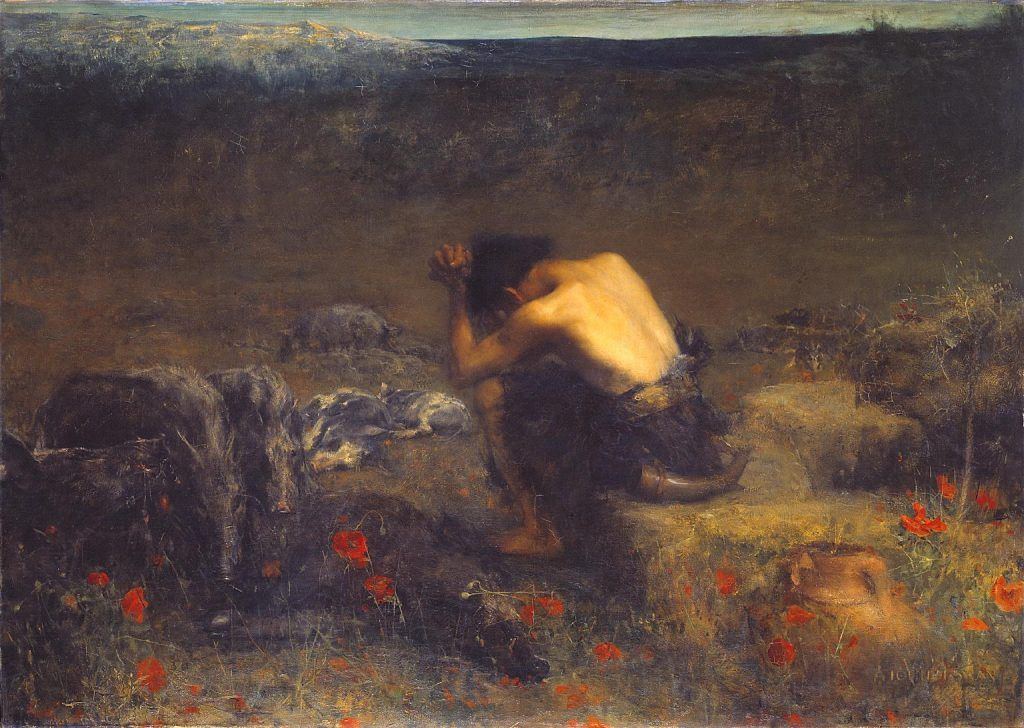
This is The Remorse of Cain (or Il rimorso di Caino), painted by Giovanni Battista Biscarra (also known as Giovan Battista or Jean-Baptiste Biscarra, 1790–1851).
commons.wikimedia.orgIt dates to 1817–1818 (oil on canvas, roughly 195 × 145 cm). It is housed in the Palazzo Carignano in Turin, Italy.
Quick History and Context Biscarra was an Italian (Piedmontese) painter, sculptor, and lithographer born in Nice (then part of the Kingdom of Sardinia) who worked mainly in Turin and Rome. He trained in neoclassical styles but infused his work with Romantic emotional intensity. This painting brought him significant early fame in Rome and is one of his best-known works.
en.wikipedia.org The scene depicts the biblical Cain (son of Adam and Eve) in deep remorse and despair after murdering his brother Abel out of jealousy (Genesis 4). Cain is shown shirtless and crouched in a barren, dark landscape, head buried in his hands or arms. Scattered around him are Abel’s flock (sheep/goats, some dead or dying), red poppies (symbolizing blood, sacrifice, or fleeting life), and a broken earthenware vessel—evoking the shattered lives and offerings involved in the story. The dramatic lighting, desolate setting, and raw emotional pose reflect early 19th-century Romanticism’s focus on human passion, guilt, and the sublime power of nature/faith.
alamy.comIt’s a classic example of biblical history painting popular in the neoclassical-to-Romantic transition period, using the Cain and Abel narrative as a vehicle for exploring themes of sin, regret, and divine punishment. The work helped establish Biscarra’s reputation before he took on more official and decorative commissions in Turin.