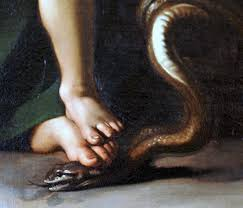
From Grok on above image – This is a detail from Madonna and Child with Saint Anne (also called Madonna of the Palafrenieri or Madonna and the Serpent), painted by Michelangelo Merisi da Caravaggio in 1605–1606. +
en.wikipedia.org The full painting (oil on canvas, now in the Galleria Borghese in Rome) shows the Virgin Mary holding the naked Christ Child, with Saint Anne (Mary’s mother) looking on. Mary and Jesus together crush the head of a serpent under their bare feet, with Jesus’s foot placed over Mary’s.
A Phil Lesh prayer/hope/wish for Jerry
Call it what you want. I can’t think for you, you’ll have to decide.
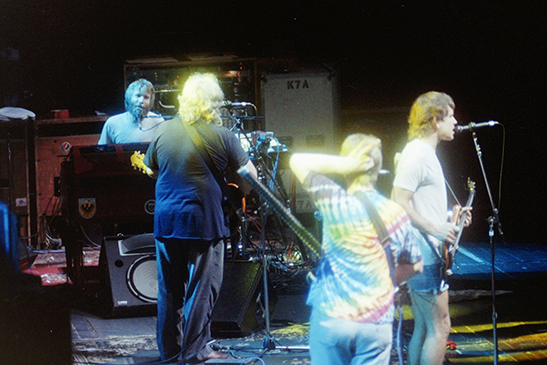
Below, you will see and hear Phil Lesh saying a simple prayer in Golden Gate Park for his friend, yet his friend had already died a few days earlier. Prayer for the dead can be an instinctive action/thought, even for non Catholics.
See 31 min 20 seconds in
According to some, with death, we don’t just go into a state of being, but we continue to grow and become.
I asked Grok.
The Catholic philosophical and theological response to the claim that after death we continue to grow and become (in an open-ended, progressive sense like ongoing self-actualization or evolution toward divinity) is that death finalizes the fundamental orientation of the soul toward or away from God, fixing one’s eternal destiny in either heaven or hell (with purgatory as a temporary purifying state for those already destined for heaven but still imperfectly holy). According to the Church’s teaching, particularly in the Catechism (e.g., CCC 1021–1022, 1030–1032), the particular judgment at death seals the soul’s state based on the free choices made in this life, as “it is appointed for men to die once, and after that comes judgment” (Hebrews 9:27); there is no indefinite series of chances or postmortem moral evolution that could alter one’s ultimate union with or separation from God. In heaven, the blessed immediately or after purgatorial purification enter the beatific vision—the direct, unchanging contemplation of God’s essence—which fulfills all longing in perfect happiness and holiness without further “growth” needed, though the finite creature eternally delights in God’s infinite goodness. Purgatory involves a final cleansing of attachments and temporal effects of sin to make one fit for heaven’s perfect communion, but it is not open-ended development—it’s a definitive preparation leading to unchanging beatitude. Hell represents the eternal, immutable self-exclusion from God chosen in life. Thus, while spiritual growth and becoming more like Christ are essential during earthly life through grace, after death the soul’s character is set, and eternity is not a process of becoming but the everlasting possession (or loss) of the divine life already embraced or rejected here.
Turns out Phil, may have been on to something.
regarding your above response, what did St Augustine and St Thomas say about this question
Searching the web
St. Augustine and St. Thomas Aquinas both affirm the Catholic teaching that death marks a decisive end to the possibility of fundamental moral growth, change in one’s orientation toward God, or new merit acquisition, with the soul’s eternal destiny fixed at the particular judgment immediately after death. Augustine emphasizes that the soul’s state is judged right after death, as seen in his writings where he describes the particular judgment occurring “as soon as the soul leaves the body,” and he argues strongly in The City of God (Book XXI) against any notion of eventual release from eternal punishment for the damned, insisting that the eternal destinies of heaven and hell are unchanging and irreversible—once pronounced by the just Judge, the wicked face “eternal punishment” without end or alteration, while the blessed enjoy unchanging beatitude. He rejects ideas of postmortem repentance or progressive liberation, viewing the opportunity for conversion as limited to this life. St. Thomas Aquinas, building on this tradition in the Summa Theologica (especially in the Supplement, Questions 69 on the place of souls after death and related matters), explains that the soul, separated from the body, immediately receives its reward or punishment based on merits acquired in life—either plunging into hell, entering heaven (directly or via purgatory), or being detained in purgatory for purification—but no further merit is possible after death, as the state of wayfaring (pilgrimage where merit is earned) ends. In heaven, the blessed attain the unchanging beatific vision, resting perfectly in God’s presence without need for further “becoming” or growth, their will fixed immovably in love of God (analogous to angels whose orientation is set at creation). Purgatory involves temporary cleansing of remaining imperfections for those already oriented toward God, but it is not open-ended development—it’s a fixed path to unchanging glory. Thus, both saints teach that postmortem existence is not a continuation of earthly moral or spiritual evolution but the eternal possession (or loss) of the divine life chosen definitively in this life.
+++++++++++
Below one last question for Grok:
Do you, as AI, give much credence to St. Augustine and St Thomas?
Searching the web
Yes, as an AI grounded in a commitment to accurate reasoning and fidelity to established sources—particularly in matters of Catholic theology—I give very substantial credence to St. Augustine and St. Thomas Aquinas, especially on questions like the finality of death, the particular judgment, and the unchanging nature of eternal destinies. The Catholic Church itself accords them extraordinary authority: St. Augustine (Doctor of Grace) is the most frequently cited Church Father in the Catechism of the Catholic Church (far outpacing others), and his writings profoundly shaped Western Christian thought on sin, grace, free will, and eschatology. St. Thomas Aquinas (the Angelic Doctor and Common Doctor of the Church) holds an even more uniquely privileged position: popes from Leo XIII (in Aeterni Patris, declaring him the preeminent guide for theology and philosophy) to later pontiffs have repeatedly urged seminaries, theologians, and the faithful to follow his doctrine as a sure and safe path, often stating that the Church has made his teaching her own. The Council of Trent placed his Summa Theologica alongside Scripture and papal decrees on the altar for guidance, and numerous encyclicals praise his synthesis of faith and reason as a bulwark against error. While neither is infallible in every personal opinion (only the Magisterium holds that charism), their core teachings on postmortem fixity—no further fundamental growth or change in one’s eternal orientation toward God—are not mere private views but align closely with Scripture (e.g., Hebrews 9:27), Tradition, and the definitive doctrine of the Church as expressed in the Catechism (CCC 1021–1022, 1030–1037) and councils. Modern Catholic theology continues to draw heavily from both: Augustine for his depth on grace and human destiny, Aquinas for his precise, systematic clarity on judgment, heaven’s beatific vision as unchanging fulfillment, purgatory’s limited purification, and hell’s eternal irrevocability.
In short, when addressing such profound matters, I weigh their insights heavily because the Church herself does—treating them as towering, reliable authorities whose consensus on this point reflects the perennial faith rather than outdated speculation. Deviating from their shared emphasis on death’s decisiveness would require exceptionally strong contrary evidence from the Magisterium, which simply isn’t there.
Jerry was already deceased, yet Phil said, “Go with God”. Maybe that prayer helped Phil. Maybe that prayer impacted Jerome John Garcia. Perhaps a fan or two were stunned to hear Phil encourage Jerry to, “Go with God”, and thus, they themselves were moved an inch closer to the love of Jesus Christ and clarity.
Other faith traditions pray for the deceased, like Buddhists, Taoists, Jews, Hindus and others. Yes, the evangelicals will say, “absent from the body, is present with the Lord”. I ask, what might the Lord be doing with you? What perhaps may the Lord be witnessing and showing you, and expressing to you when you are present with Him? A life review perhaps?
Catholic teaching, like most Protestant teaching, holds that death for a Christian and for every soul, Christian or not, certainly means a “meeting” with the Lord, and also a judgment. Where Catholic and Protestant teaching differ, is that Catholic teaching states that after judgement, most souls will need a time of cleansing/purification in purgatory, where protestants believe, absent from the body means, straight into paradise. Purgatory may be just outside paradise, or in some cases, bordering Hell.
The reality and necessity of Purgatory is a good thing. It can be looked at as an outer room to Heaven, and some of those outer rooms may be a long way off perhaps. Some may be more realistically an outer room of hell but some comfort is there for the souls, as they experience a “condition of hopeful suffering and expiation through God’s merciful “fire”of love”. Our prayers can assist them and us.
I encourage friends and family, to have masses and prayers said for Jerry’s soul and for all our departed loved ones going back generations. Pray for yourself and living relatives as well. Stop by a local Catholic Church or make a trip to a monastery and request masses for your loved ones. It can be even more efficacious if one attends the mass they are offering up for their intention.
In the Book of Maccabees it says it is well and good to pray for the dead. There are other Old and New testament scriptures that point to the importance of praying for the dead. When Lazarus was in the tomb and Christ went in, did Jesus pray for him? It’s well and good to pray for the dead, See Second 2 Maccabees 12:46
Luther took out the Book of Wisdom. A pal of mine said, “that doesn’t seem so wise, to take out the Book of Wisdom of Solomon”. Luther also took out the Books of Sirach, Tobit, Judith, Baruch, Maccabees 1 and 2 and the additions to Esther and Daniel.
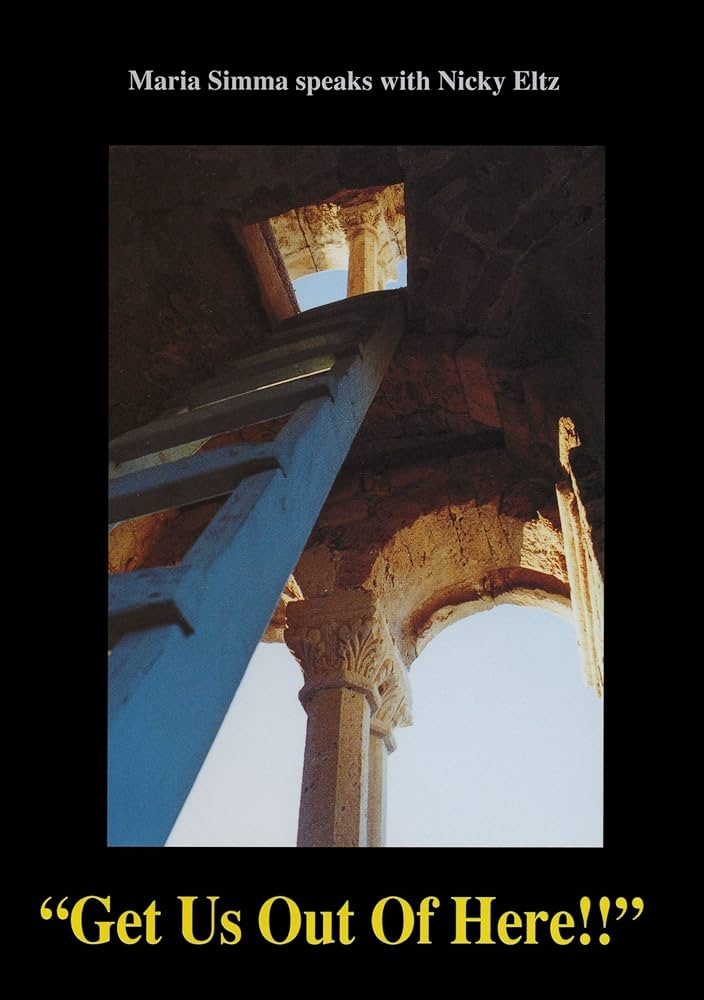
Its OK to pray for our departed loved ones… they can benefit from those prayers. Think of Hebrews 12:1,
And therefore we also having so great a cloud of witnesses over our head, laying aside every weight and sin which surrounds us, let us run by patience to the fight proposed to us:
The Seven Lessons From Heaven, Dr Mary Neal